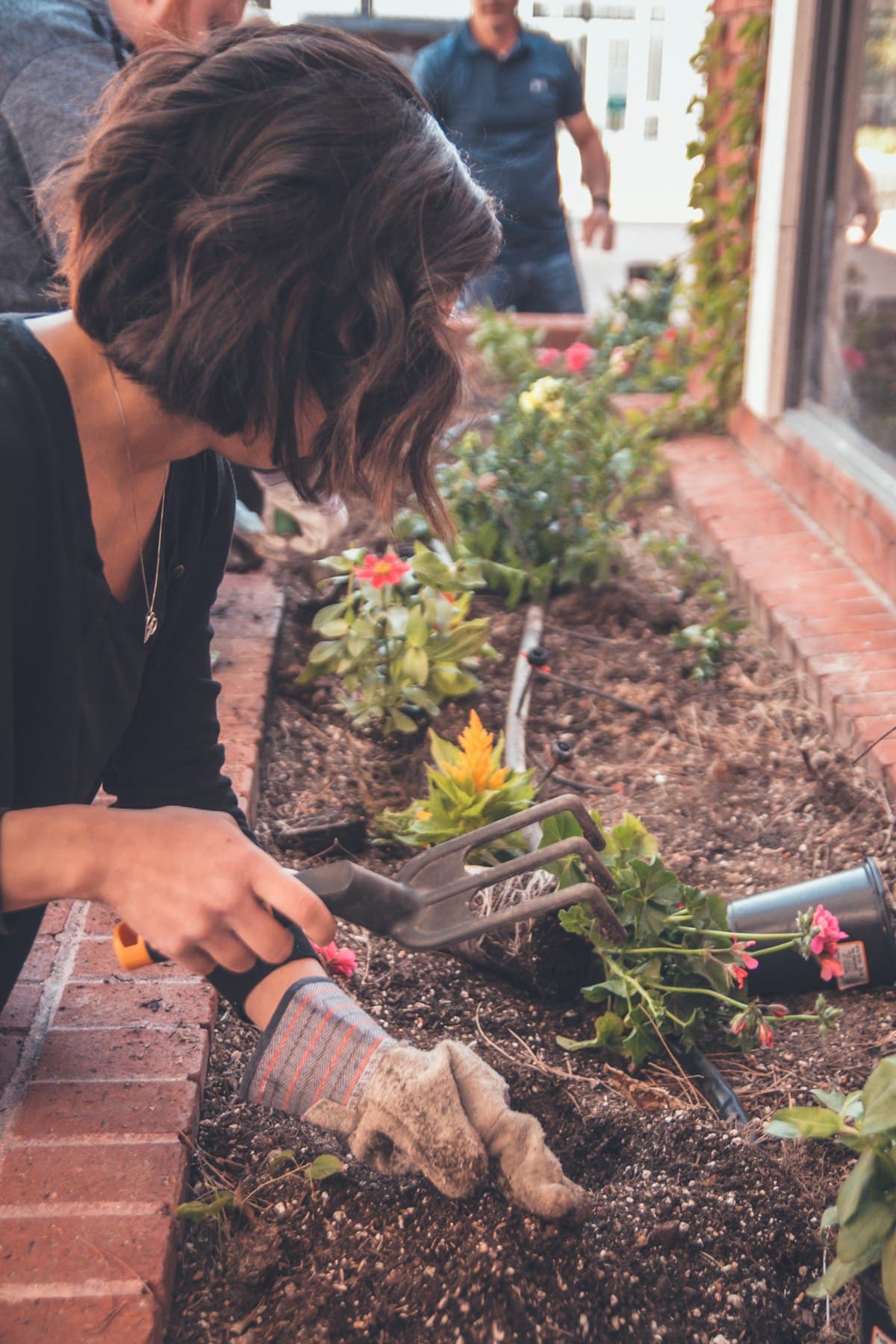
Check the ground beneath a new garden before ordering plants: construction debris, levels, drainage, topsoil quality and amendments based on soil condition.
The ground left after a house or factory build may be a mixture of original soil, filling material and construction debris. A thin layer of attractive topsoil can hide that mixture without resolving it. Before planting a new garden, inspect the ground that will support the roots and carry irrigation water.
Inspect different parts of the site
Check more than one location. An area used for material storage may be compacted, while another area may contain rubble or remain wet after rain. Mark these differences on the planting plan. Ask the landscape team what preparation each area needs rather than assuming the entire site has the same soil.
Locate known underground services before excavation. Agree on debris removal and the intended finished levels, including their relationship to paths and building thresholds. Where imported filling material is needed, distinguish it from the soil specified for the planting area.
Use a soil test to guide additions
Soil testing can help identify nutrient levels and guide decisions about compost, manure and fertiliser. University of Minnesota Extension describes a soil test as a snapshot of current soil nutrients. Use locally appropriate testing and interpretation for your garden rather than following a fixed fertiliser recipe from a different site.
Ask the supplier about the origin and quality of imported soil and amendments. Review a sample before accepting a large delivery where practical. Keep the approved material description in the BOQ, including quantities and the preparation work. A description such as 'good garden soil' leaves too much open to interpretation.
Coordinate soil work with construction
- Finish heavy construction and delivery routes before final bed preparation where possible.
- Install agreed underground irrigation and service routes before closing the ground.
- Keep stored materials and repeated vehicle traffic off prepared planting areas.
- Check levels and drainage before laying lawn or placing specimen plants.
- Keep an accessible route for the planting team and later maintenance.
Plan the first period of care
Agree on who checks watering immediately after planting and how issues will be recorded. New plants, established trees and lawns can have different requirements, so ask for instructions tied to the actual planting plan. Keep records of supplied plants and any replacements rather than relying on memory during follow-up visits.
Do not treat every struggling plant as a reason to add more fertiliser. Check the planting position, water supply and drainage first, then seek advice based on what is happening on site.
GardenPlus's Soft Landscaping service includes lawns, shrubs, trees, ground-cover plants and specimen plants, together with soil conditioning, organic and inorganic manuring, transplantation and follow-up maintenance. Discuss soil preparation as part of the initial scope so it is included before the planting order is finalised.
