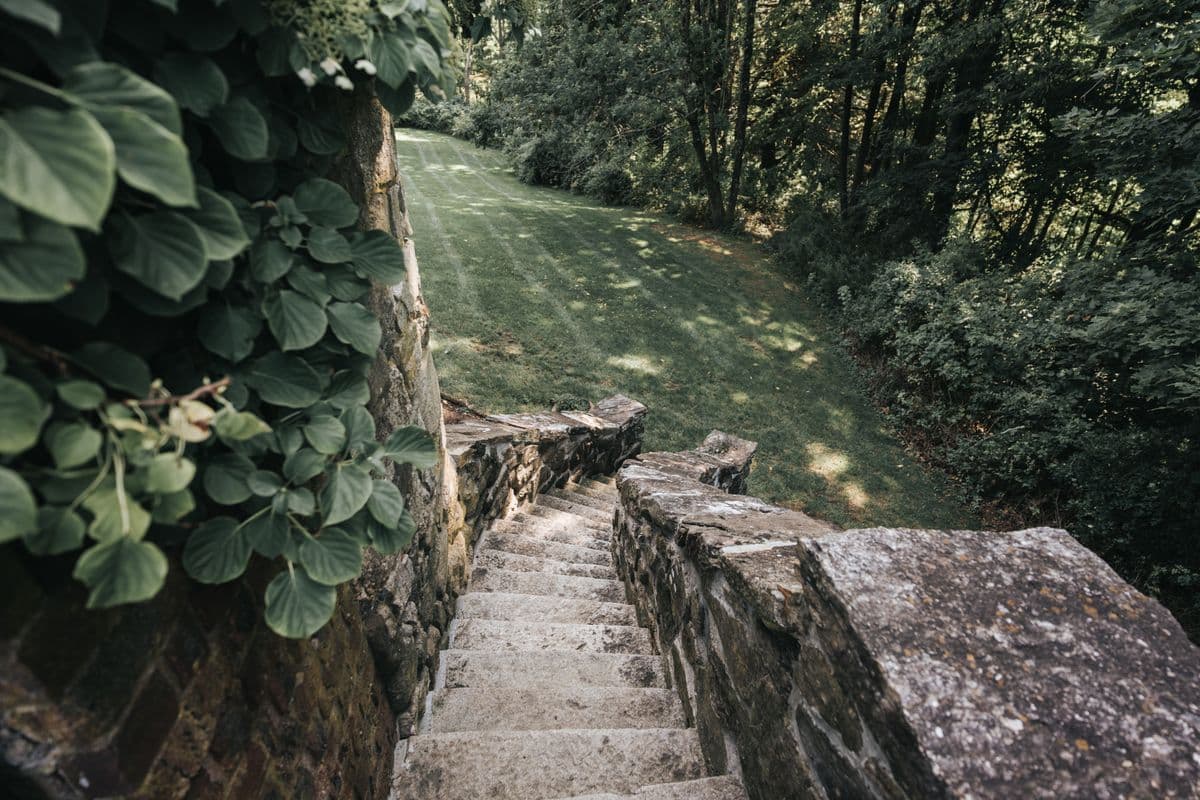
Plan a compact garden around measured space, a clear walking route, useful shade and planting that leaves room to sit and maintain it.
A small front garden has to work around real daily use: opening the gate, carrying shopping, parking and reaching the house. A layout that looks spacious in a photograph may feel crowded once those routes are included. Start with the clear space you need, then decide how much planting and seating it can support.
Measure the usable garden
Measure the actual planting area rather than working from the house's marla size. Mark door swings, steps, inspection covers, taps and utility access. Check the route with the furniture you intend to use. Chairs need space to move, and a planted border should not force everyone to walk through the grass.
Draw two alternatives before choosing finishes. One might use a modest lawn with beds along a boundary; another might favour a sitting area with more planting and less grass. The better option is the one that suits your use of the garden and the light available, rather than the option with the most features.
Choose one main place to sit
Place seating where it can be reached comfortably and used at the time of day you prefer. Check afternoon exposure and views from neighbouring windows. Shade may come from the building, suitable planting or a garden structure. Its position matters more than adding several benches to a space that has room for only one useful seating area.
Give plants room to grow
Ask for the expected mature size of shrubs and trees, not just their nursery size. A small garden can quickly become a regular pruning job when plants are packed tightly against paths and windows. Use a short plant list, repeat it where appropriate and leave access for watering and maintenance.
- Record sunny and shaded areas at different times of day.
- Keep plant choices tied to the light and soil in each bed.
- Separate paths from planting with a clear, maintainable edge.
- Avoid positioning large containers over drains or inspection covers.
- Plan where a hose or irrigation pipe will run before completing paving.
Keep the material choices simple
A limited paving palette is usually easier to coordinate with an existing house. View material samples beside the facade and assess the proposed finish when wet as well as dry. Discuss slope and drainage with the installer; appearance alone does not tell you whether a path will work after rain.
GardenPlus can prepare a layout and 3D landscape design proposal before execution planning and a detailed quotation. For a small garden, ask the proposal to show furniture, circulation and the eventual plant sizes. Those details are more useful than a view filled with greenery that leaves no room for everyday use.
